
King of Spain Award 2007

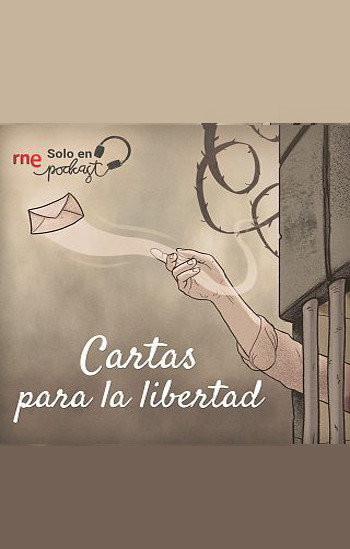
Podcast that tries to be the speaker for the prisoners who write letters.
I am the current director and presenter of the program 'In first person' from RNE on Radio 5. I approach social realities that surround us, but that we are often unaware of, without filters or nuances. Life stories and realities of anonymous people that deserve to be told by them, in their environment, without disrupting that reality with the intention of taking listeners through the airwaves to those other places. Knowing is empathizing, knowing is not judging without reason.
'In first person' has been recognized with the XVI February 28 Award from the Advisory Council of RTVE in Andalusia for a report about a learning center, the Reina Sofía Award against Drugs for a program in collaboration with the Proyecto Hombre Foundation, the Luís Portero Award in honor of the living donor edition, and the Right to Children and Journalism award for a report about the school bullying, among others.
My journey through the airwaves began before going to the Faculty of Information Sciences in Barcelona because I studied a radio course at the Mk3 school and toured the province with various programs and sections on municipal radio stations such as Ràdio Mollet, Ràdio Castelldefels and Ràdio Santa Perpètua de la Mogoda while studying journalism. And in the year of the Olympics in 1992 I worked at the Radio 80 Serie Oro music network that no longer exists.
Already in my last year of studies at the Freie Universität in Berlin, I was a correspondent in Germany for Radio Voz between 1995 and 1998, an editor at Multikulti Radio in Berlin in 1995, in addition to collaborating with social reports at ORB (Osdeutscher Runfunk Berlin Brandenburg).
Subsequently, I deepened my commitment to training in the field of broadcasting, assuming the role of teacher in the radio module in RTVE's 360º Master in Journalism. This experience allowed me to share my knowledge and passion for the radio medium with new generations of journalists. In addition, I taught radio workshops at the University of Seville in the Faculty of Communication for Radius, an initiative that reinforced my conviction in the importance of practical and specialized training for future professionals in the sector.
Series of reports-interviews that take a historical tour of a topic based on a personal story.
This tour includes historical testimonies, which help to understand the reality of another time when these voices were silenced.
Stories of people whose voices have been silenced for different reasons: race, religion, ideologies, color, occupation or any other reason. People who have defended ethical, fair, democratic and very dignified values but who were not accepted by society or by the rulers of the moment.
Silenced Voices that were unfairly marginalized and despised. Some are voices from the past that remain silenced today, others are new Silenced Voices. In this space and carrying out public service work, Voces Silenciadas aims to give voice to all these people. Each space deals with a different theme of people who have always believed that “Another world is possible” and have fought and continue to fight for that other world.
This commitment to giving a voice to the voiceless and my dedication to highlighting forgotten or ignored stories earned me the honor of being awarded the King of Spain Award of Journalism, a recognition that reflects the importance of these narratives in journalism and in our society.
Letters for freedom pretends to be the prisoners' speaker who write letters. In these letters the father, the son, the friend, the husband or the brother write. The person and not the convicted person who is in jail.
As a diary…
Today I also experienced the same feeling. Every time I enter the prison to go to module 102 of the penitentiary center in Seville 1 I have the uncertainty of: who will come, will they remember to bring a letter. It is difficult to always have the same ones because there are those who are on leave, others who have just been released, some who are not in the mood or are working in the commissary, cleaning or cutting hair. But they almost always arrive prisoners at the hands of someone else who is already a regular in the workshop. There are also those who come, but they don't like to write, although it helps when they talk to me about Talguera slang, for example.
In the library where we meet, emotions often run high. Because reading a letter where you have 'exposed yourself' and opened your heart, excites those who read it and those of us who listen. It is easy to get an idea of what it is like to live deprived of liberty for months or years without being able to see your family or without saying goodbye to a family member who has died. Not everyone has permission to go out on the street from time to time, many have not set foot on it for years.
There are moments when they hug each other, they exchange knowing glances between them, their eyes moisten while reading the letters. They are intense moments for everyone, but very liberating at the same time. The prisoners greatly appreciate that time of chatting, of relaxed listening, where they are the protagonists not because of their crimes but because they are parents, children, brothers or friends of their friends who feel, cry, laugh and suffer.
They are letters for freedom because the letters are free, they can write without being judged, without being reproached or answered on the fly. Your words and your thoughts are free. Also, cards can get in and out of jail, they can't.
From 2001 to 2004, I directed the first section of a magazine that I called 'El locutori' on RNE, Ràdio 4. It was a very innovative format because it invited immigrant people to the radio studio who, at that time, when cell phones did not exist, They regularly went to the call centers to talk to their families and resolve as many issues as possible in the shortest time possible because the accountant ran and it was expensive to call. They came to the radio and could call for free, in exchange they were asked to record the beginning of conversations with their families in their countries of origin, in their languages. And then, an interview with them followed. It was a novel program that was invited to the Barcelona Forum, the FNAC and different events. And in 2004, I had the honor of receiving the Francesc Candell Award for the program. This recognition was not only a reflection of my commitment to social and community journalism, but also a testimony of the impact and importance of 'El Locutori' in addressing issues of integration and cultural diversity in our society from a more human perspective.
In this podcast I am creating a memory bank that does not appear in textbooks because they belong to the social memory of our country. After more than 20 years as a social journalist, I have been meeting very valuable and brave people who have launched necessary projects for vulnerable groups that today are consolidated or have created a school. I am rescuing many of these testimonies so that their memory is not lost.
Along the way I also meet other charismatic people who are building memory and who join this memory bank because they are catalysts of change in our neighborhoods, in groups at risk of exclusion, in families and in society in general. Life stories are intertwined, some laid the foundations, others continue to build on those foundations, others opt for innovative formulas but all do so in pursuit of a more just and dignified society for all, conquering and consolidating rights.


